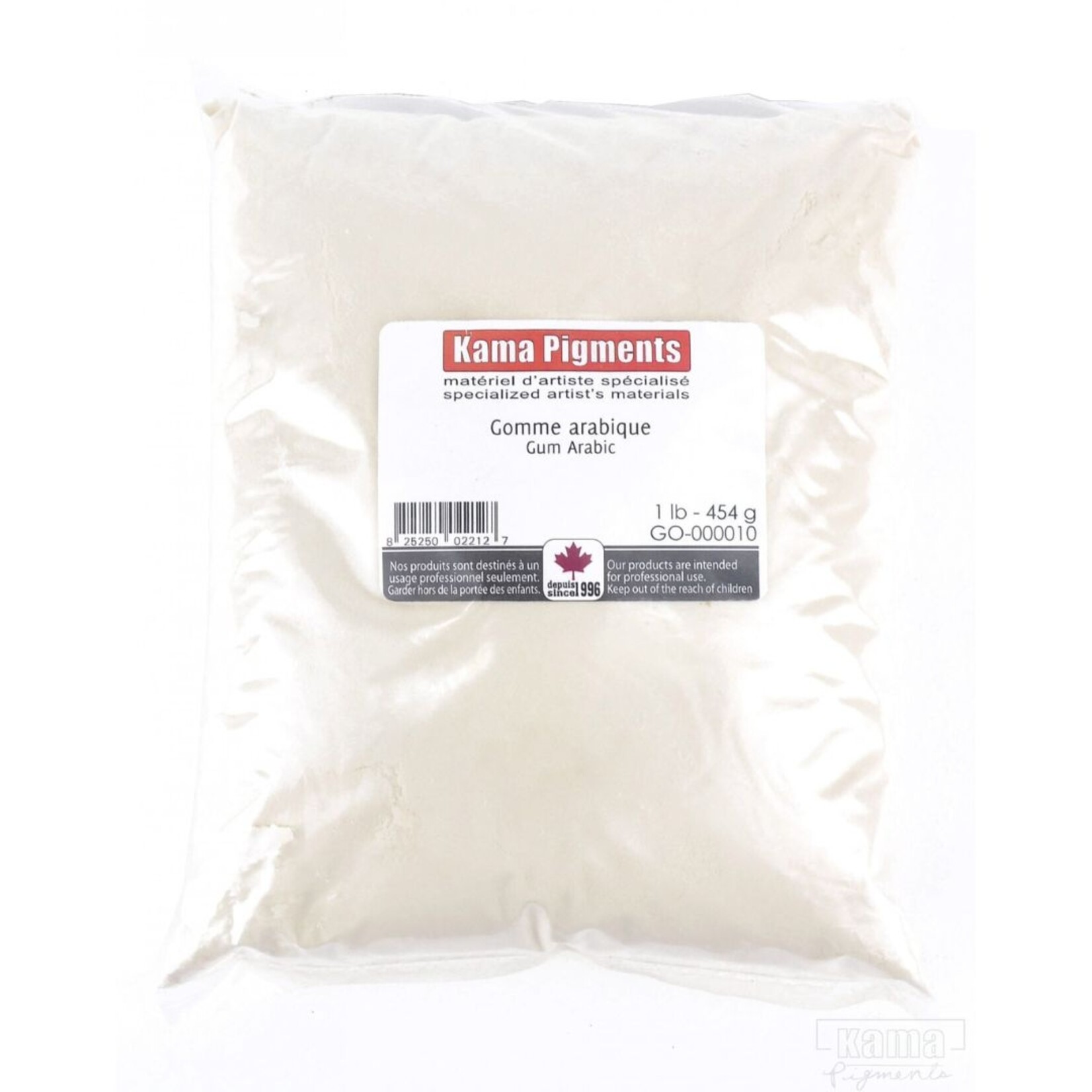
Gum Arabic is certainly the oldest and best known of all the gums. The Egyptians knew as the kami and allegedly used it by the third dynasty (2650 BC.) To ensure the cohesion of the bandages of mummies.
Chemically, gum Arabic is a solidified descending sap exudate produced naturally or as a result of an incision on the trunk at the foot of trees of the acacia family. It is harvested mainly in Saharan Africa. Gum Arabic is an highly ramified acid polysaccharide often found in the form of potassium salts or of mixtures of magnesium and calcium. Gum Arabic is commercially sold as a powder or unmilled crystals more or less round with colours ranging from pale to brownish yellow.
Fine-Arts
In painting gum Arabic is the traditional binder of watercolour and gouache. It can also be used in liquid solutions as painting medium or as a constituent in the manufacture of traditional dry pastels, although gum tragacanth is primarily used. A diluted solution of gum Arabic may also be used as a fixative for dry pastel or charcoal.
In lithography, the hydrophilic properties of gum Arabic help create and maintain a water film on the non-inked portions of the lithographic stone (water pushes the fat).
In photography, gum Arabic is also used in the gum dichromate process and for certain retouches and alterations.
Technical Information
- CAS: 9000-01-5
- EINECS: 232-519-5
Chemical Properties
All values given in the International System of Units (SI), unless otherwise noted.
safety data sheets